Matcha is replacing cappuccino and wellness studios are taking over testosterone-driven gyms. Somewhere between pickleball courts and co-working spaces, India’s Gen Z is tiptoeing into the wedding fashion industry with love. Today’s generation doesn’t ask, “What brand is this?” They ask, “Does this feel right right now?”
The wedding fashion game has gone through a spin – it’s time to bid goodbye to wedding shopping trends that are performative. Apparently, slow fashion is taking over designer dreams. So does that mean you have to ditch your dream of wearing Kareena Kapoor’s lehenga from Boliya Chudiya? No way!
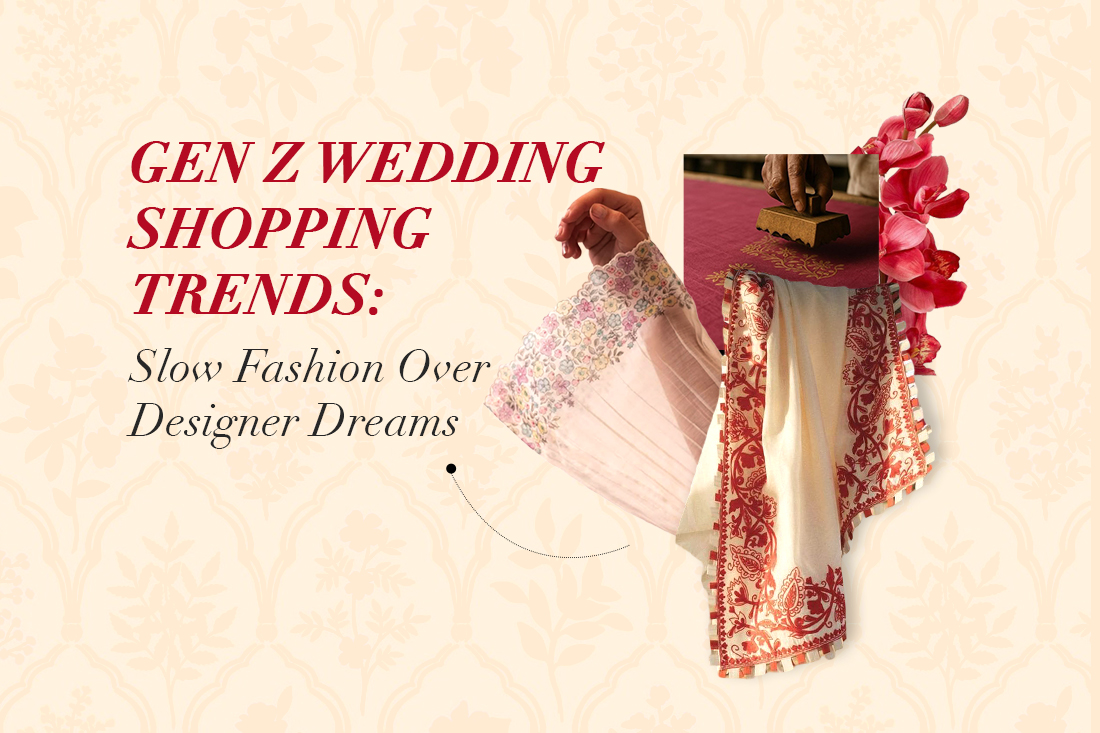
Thanks to slow fashion wedding trends, it’s getting less expensive and more personal. With handcrafted bridal wear and minimal outfits, everything is changing. As per a recent report, 62% of Gen Z shoppers prefer to buy from sustainable brands, more than any other generation.
Conscious Wedding Shopping: What Does it Mean?
Gen Z has been officially labelled as the “purpose-driven generation”. They not only care about the social and environmental impact of their actions but also give personal attention to every detail. At the core, Gen Z shoppers seek out companies that use sustainable fabrics and align with their values.
Thrift shopping – a trend started by Gen Z – has now gained popularity in wedding trends as well. From rentals to thrifts, Indie designer wedding outfits can now be spotted on Instagram handles at rented prices and half prices. We’ve seen big celebrities like Alia Bhatt repurposing her wedding saree on many occasions.
Slow Fashion vs Designer Bridal Wear
Gen Z is not chasing trends; they’re recreating the future of Indian culture and commerce. In a world where Korean skincare routines coexist with Ayurvedic beauty rituals, slow fashion has earned a name for itself – no wonder Gen Z is choosing sustainable bridal wear. The new-age generation has proven that sustainability is not just a trend.
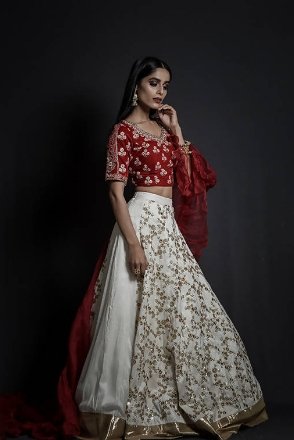
Pallavi Poddar, a renowned wedding fashion designer, is embracing sustainability and ethical standards of bridal style. Not only sustainable, but also a beautiful choice for every bride who wants to feel like royalty. A Pallavi Poddar dulhan is what dreams are made of – moreover, every piece aligns with ethical principles and beauty standards.
On the other hand, designer wear labels can cost more than slow fashion labels. Gen Z considers these things as impractical and inconsiderate for both the environment and their pocket. Renting is also an open option for embracing luxury and designer labels, as upcycling helps the planet.
Sustainable Groom Wear: Wedding Fashion Trends Gen Z Loves
Artisanal fabrication and minimal embellishment – this is exactly what a collaboration between ambition and well-being looks like. For instance, Rohit Bal has recently launched a selective sustainable edit where couture is integrated with slow processes.
No mass production – simple, subtle ways where there’s minimal waste and thoughtful tailoring.
Moreover, region-specific production and custom small-batch tailoring is taking over mass production. Consciousness over consumption is clearly the motto for 2026. Minimalist bridal fashion and sustainable groom clothing – it’s not just a costume but a commitment to values, craft and the future.
Why Does Gen Z Love Slow Fashion for Weddings?
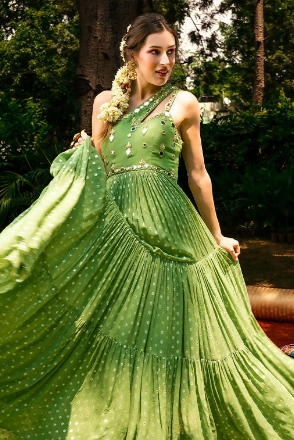
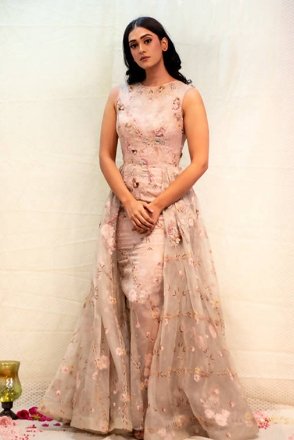
Pastel shades, sustainable fabrics, natural dyes and organic designs are the trendsetters for wedding fashion trends in 2026. Brides want multiple looks for different functions, from mehendi to reception. This often leads to searching for bridal boutiques locally as well as online to try outfits without overwhelm.
Many also prefer artisanal handwork and locally crafted pieces, valuing longevity and craftsmanship. New wedding code? Craftsmanship and comfort in clothing. Raised amid economic volatility, climate anxiety, and algorithmic overload, Gen Z is seeking brands that offer clarity, as they don’t entertain clutter and chaos in relationships over wardrobes.
Wedding Asia offers fluid, experimental fashion trends that tell stories instead of following cycles. We understand that while tradition remains important, it can successfully evolve into something new.