The generation getting married right now, the one deep in wedding planning websites at 1 a.m., comparing bridal jewellery styles, stressing over bridal wear choices, they’re also the same people questioning Indian wedding rituals.
Not to be difficult but simply because they are actually curious and want to know what they’re walking into.
So are we losing the meaning of rituals? Or are we, for the first time in a long time actually starting to find it? Let’s find out more.
Why Are Modern Couples Questioning Wedding Rituals?
Here’s what nobody talks about: a lot of people go through entire wedding ceremonies, from mehendi, haldi, pheras, saptapadi without knowing what a single one of it actually means.
Brides are beautifully dressed, wearing bridal jewelry that probably took weeks of wedding shopping to find, surrounded by family, and completely disconnected from the moment they’re standing in.
When ritual becomes performance, it gets hollowed out fast. It becomes something you photograph rather than feel. So let us now read about the actual Indian wedding rituals.
What Is the Meaning Behind Indian Wedding Rituals?
Take something as simple as the exchange of wedding rings. Most people treat this as a Western import, a formality, or merely a moment for the photographer. But the circular shape, no beginning, no end, is one of the oldest symbols across almost every human civilization for continuity and eternal connection.
Next comes the tradition of wearing gold at weddings. Women across South Asia have worn gold wedding jewellery for centuries because gold was one of the few forms of wealth a woman could legally own, could carry with her, could keep as her own financial security.
Understanding that history doesn’t make bridal jewellery a political statement. It makes it heavier in the best possible way. It makes it more personal and deliberate. Moreover, Jewellers like Malabar Gold & Diamonds and Vega Jewellers still carry pieces rooted in those traditional forms.
Wedding Rituals List: One You Must Follow
Here’s what’s interesting, the rituals that have real depth? They are the ones that are carried out in a better way.
Haldi ceremony: The haldi ceremony, for instance. Turmeric as an antiseptic, as a skin brightener, as a grounding ritual the night before a major life change where family literally touches you and wishes you well. That’s community-rooted medicine wrapped in ceremony. Ask any dermatologist about turmeric and they’ll spend twenty minutes explaining the science. Ask any grandmother and she’ll just say it makes you glow. Both are right.
Bridal chura ceremony: The chura, yes the red and white bangles worn by Punjabi brides. The colours literally have meaning behind them. The ritual of the maternal uncle bringing them has meaning. The rule that the bride shouldn’t be seen wearing them publicly before the wedding has meaning. The whole ceremony around it is about transition, marking the before and the after. Once you know that, wearing them feels like more than an accessory choice.
The Hindu pheras: When a bride understands that the pheras she’s about to take represent specific vows, each circle a different promise, each one witnessed by fire as a sacred element, she might just slow down and actually mean them. Rather than rushing through because the pandit seems impatient and the guests are hungry.
How Are Modern Brides Reimagining Tradition?
This is the part the older generation sometimes misreads. When a modern bride says she wants to understand her wedding planning better, she’s not rejecting tradition. She’s actually just more curious and seriously involved in the marriage traditions in India than most people have in decades.
At Wedding Asia, we have witnessed brides trying to reconnect meaning to the objects they bring into the most important ceremonies of their lives. Yes, sometimes that’s through jewellery.
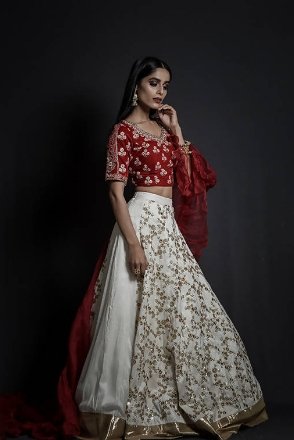
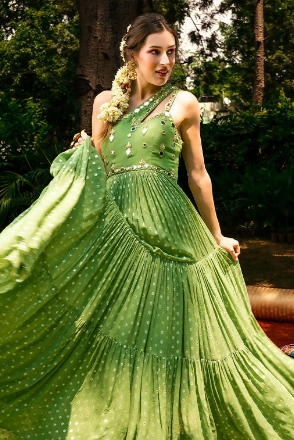
Same with bridal wear. Labels like Virachi Couture and Bhupesh Saini spotted at Wedding Asia exhibitions work with brides who want their outfits to mean something, who want the embroidery to have a story, and the silhouette to feel intentional.
Indian Wedding Rituals Are Living Traditions
Wedding culture in India has always evolved. The saptapadi as it’s practiced today is different from how it was practiced three hundred years ago. Wedding jewellery styles have changed what’s considered auspicious in one decade looks different in the next. Bridal outfits have shifted dramatically, absorbing regional influences, new fabrics, new silhouettes.
A bride who walks through her wedding having chosen her bridal jewellery deliberately. We, at Wedding Asia, invite new-age brides with an enthusiasm to find purpose in wedding planning, especially wardrobe planning to visit our Pan India exhibitions and find what best suits her vision.
Explore more about Wedding Asia at our official website.
FAQs
- Where can I find modern mangalsutra designs?
At Wedding Asia, you will find plenty of jewellers who are making modern jewellery pieces for new age brides for their special.
- Is it necessary to wear red on wedding day?
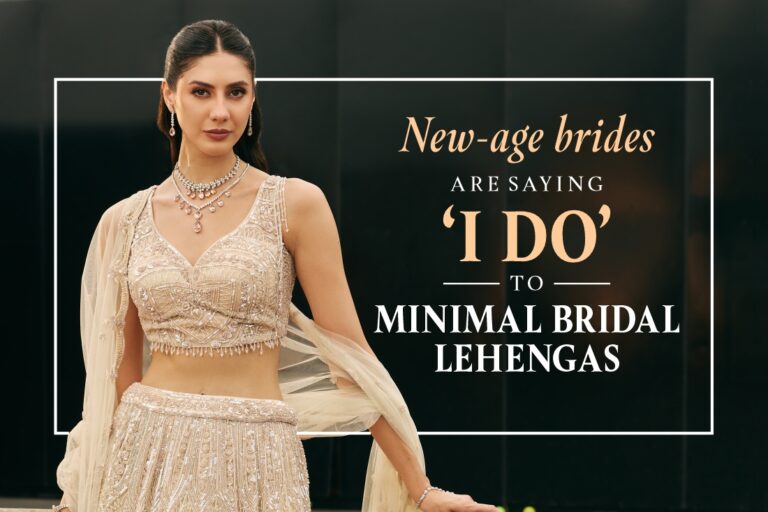
No, it is not necessary. Many bridal fashion labels at Wedding Asia offer a variety of bridal fashion lehengas in different hues such as pink, lavender, maroon and peach.
- What are the latest trends for brides in 2026?
The latest trends for brides in 2026 is to ditch traditional wear and opt for modern contemporary lehengas with corset blouses and capes and lightweight statement jewellery pieces such as ear cuffs and sleek yet studded bangles.
- Where can I shop for contemporary Indian lehengas for my wedding?
You can visit Wedding Asia exhibitions hosted in Surat, Pune, Hyderabad, New Delhi, Ludhiana, and Mumbai to shop for contemporary Indian lehengas for wedding celebrations.
- What are some modern Indian wedding outfit ideas?
Cape sets, sharara sets, contemporary lehengas with corset and one-shoulder blouses are some of the modern bridal outfits you can find during wedding shopping.
- Why do Indian brides wear red?
Red is considered an auspicious colour in many Indian wedding traditions. It symbolises love, prosperity, fertility and new beginnings, making it a popular choice for bridal outfits.
- What is the typical order of wedding rituals in India?
The order varies by region, religion and community, but a traditional Indian wedding may include pre-wedding ceremonies such as haldi and mehendi, followed by the sangeet, wedding ceremony, pheras and post-wedding rituals.