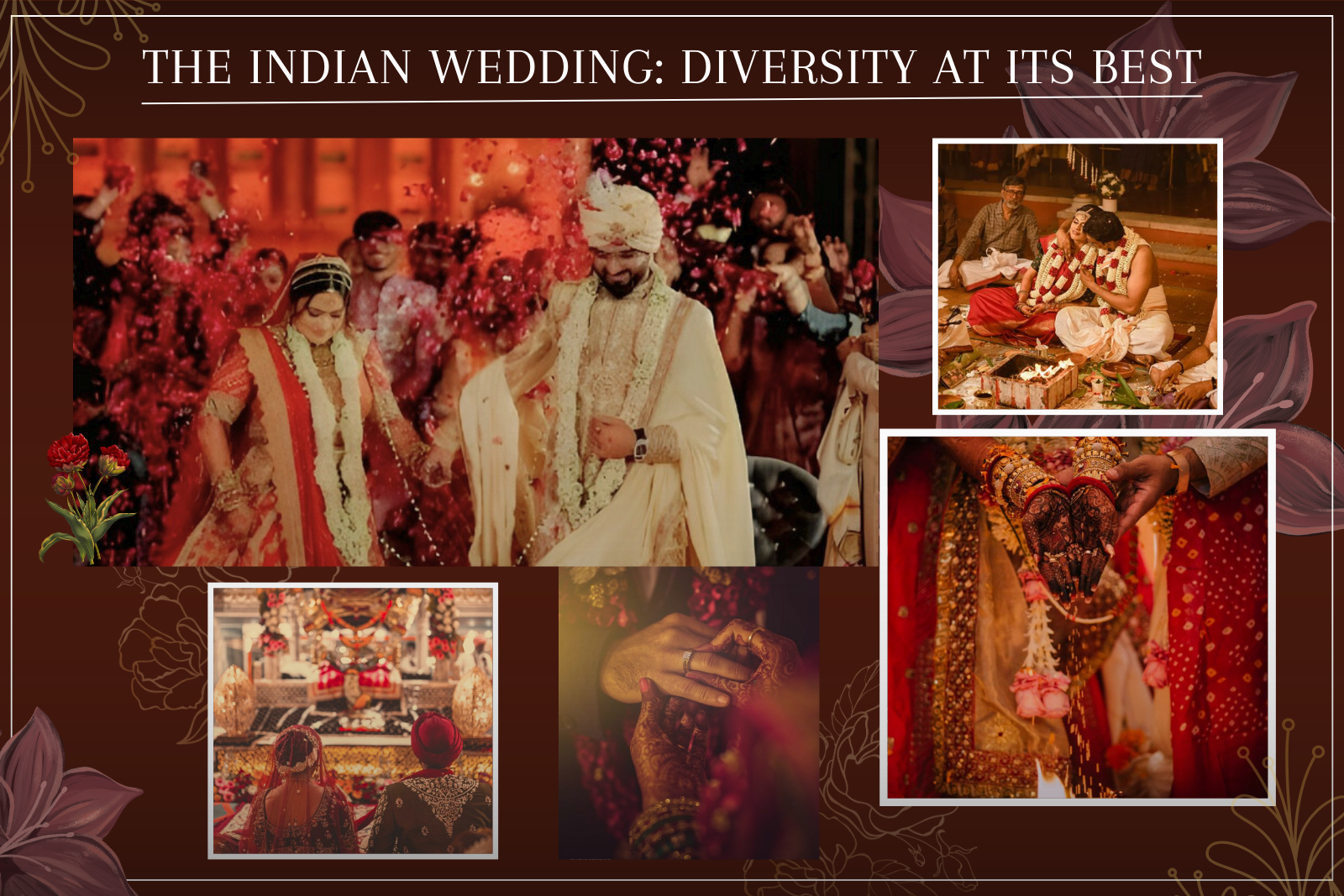
India is a land of multiple cultures and we are happy to celebrate the divine union of two souls in many ways. While we have over hundreds of traditions and cultures, there are some prominent ones that cannot go unnoticed. Amongst all cultures and traditions, Indian wedding traditions are the sacred rituals that stand out.
In this guide, we will not only take a look at the diverse Indian weddings but also explore different wedding customs from North to South India. Let’s begin an adventurous journey where we go from the icy mountains of Ladakh to the lush coffee states of Coorg and in between, discover the tribal churches of Nagaland and Mumbai’s Parsi agiaries.
Ladakh–Tibetan Weddings: Love in the Land of High Passes
The icy landscape of the Himalayas makes for an intimate and spiritual atmosphere. Perfect for surreal, heavenly wedding ceremonies. Tibetan wedding rituals are marked by Buddhist chants, ceremonial scarves (khatas), and vibrant traditional attire.
Tibetan weddings are marked by grandeur and grand celebrations. Talking about customs, in older times, Tibetan marriages were arranged by parents of the bride and the groom. Today, many old customs have relaxed and simpler ceremonies have replaced the traditional rituals.
A day before the wedding, the groom’s side sends a set of beautiful clothing and hair ornaments wrapped in silk. On the day of the wedding, the groom’s side finds a man of good status who leads the group carrying jades, jewels, colorful arrows and mirrors. Then they get a decorated horse of pregnancy whose color matches the bride’s zodiac sign.
The bride’s side performs a farewell ritual (called Qiema) before sending her off. As she leaves, someone (often a family member) holds a colorful arrow and a mutton leg, stands atop a high spot and cries out a warning: “Don’t take away the family’s fortune,” until the procession disappears from view.
Nagaland–Christian–Tribal Weddings: Music, Community & Warrior Pride
Nagaland is known for its diverse traditions and rich culture. Tribal Christian weddings include celebration of community spirit. Lively music, traditional dance performances and vibrant attires, these Church weddings are followed by a grand reception.
White weddings are particularly popular in Nagaland. Truly, a picturesque scenario inspired by Hollywood movies. The celebration of Nagaland tribe Christian weddings spans over two to three days with functions such as mehndi, sangeet and the D-day.
The sacred ceremonies include bridal march, hymn and celebratory songs. Professional pianists and musicians are hired and there is heavy decor using accessories, flowers and lights.
Coorg Hindu Weddings: Lasting Heritage & Legacy
Also known as a Kodava wedding, the Coorg Hindu wedding is a grand two-day event with beautiful rituals such as the Baale Birud ceremony. The ceremonies include religious traditions such as Padiyettam which is an invitation to the groom’s family and Kanni Pooja that blesses the bride.
The charm of unique dance performances and coffee rituals represents the rich culture and Coorg Hindu wedding traditions. Weddings across India are diversified by food and Coorg Hindu weddings serve pandi curry, Kadambattu, and rice cakes or dumplings.
The Coorgi bride wears a beautiful brocade sari in a typical Hindu style and an embroidered veil covers her head. The most endearing ritual includes the bride’s mother welcoming the groom by feeding him rice, milk and honey.
Kashmiri Muslim Weddings: Grace, Poetry & Timeless Rituals
The stunning Nikah ceremony in Kashmir shows the rich cultural diversity in Indian weddings. Across the floating market of Dal Lake, beautiful weddings take place that show how Indian weddings celebrate diversity. The luxurious celebration begins with a Malmaenz ceremony where the young women of the house tie the bride’s hair into little braids. Later, these braids are untied in a musical ritual performed by the elder women.
In the night, the Meanzraat ceremony aka the mehendi or henna ritual takes place. The bride’s family brings the tokris and trays with the shagun mehendi. It is supported by cake cutting and musical performances. After that, comes the Yiniwol and Aab Sherun in which the bride takes bath and wears a Pheran, a traditional Kashmiri dress with tilla work done on it.
The big baarat is followed by Walima and then the most important Nikah rituals. The big feast in the Nikah is called Wazwaan which is a lavish, multi-course meal, often served on ornate copper platters called Trami (or “Traem/Trammi”). Finally, the bride bids goodbye to her family with rukhsati in a well-decorated car.
Mumbai–Parsi Weddings: Elegance, Humour & Zoroastrian Rituals
Finally, a simple yet heartfelt wedding, the Mumbai Parsi wedding ceremony. Rooted in Zoroastrian customs, Parsi weddings represent the regional wedding rituals of India. The ceremonies include playfulness, dancing and warmth. It is soulful and away from the blingy, crowded and noisy atmosphere.
The pre-wedding ceremonies include Rupia Peravanu where the female folk from the bride’s side visit the groom and showers him with gifts, shagun and a silver coin. Then comes a special ceremony called Madhavsaro in which the bride and the groom’s family gift a sapling near the entrance of their house which represents fertility and abundance.
Divo Adarni is a ceremony where the groom’s family visits the bride bearing gifts. Next comes Supra Nu Murat which is similar to the haldi ceremony and then Nahan, a ritualistic bath before the wedding day. Achu Michu is where the mothers of the groom and the bride ward off evil eyes, followed by Ara Antar where the bride and groom sit facing each other, separated by a white cloth (parda). The couple is circled with a thread, and showers rice over each other. The playful belief says that whoever throws rice first rules the household.
Finally, the ring exchange aka Chero Bandhvanu is performed. Post wedding rituals include Hath Borvanu and Pag Dhovanu and a memorable visit to the fire temple. The grand reception serves Patra ni Machhi, Sali Boti / Salì‑na‑gosht, Lagan nu Custard and rice and lentil dishes.
This is how Indian weddings celebrate diversity. As we dive deeper into traditional wedding customs India celebrates, we are fully aware that love comes in different forms and ways. From Ladakh Tibetan wedding rituals to Kashmiri Muslim wedding customs, we are ready to embrace the different types of traditional wedding practices in various Indian communities.
At Wedding Asia, we invite you to celebrate unique wedding traditions across Indian states and shop for a customised trousseau. Each ceremony is special and requires the right venue, arrangements, outfits and food. So, brides-to-be and grooms-to-be, the time for cultural wedding planning begins today.